.png)
Recognizing Post-Surgery Delirium vs. Dementia in Older Adults After Joint Replacements in Washington County

Undergoing a major joint replacement procedure, such as a total hip or knee arthroplasty, is a significant milestone for an older adult. For many seniors across Washington County, these surgical interventions offer an invaluable opportunity to eliminate chronic arthritic pain, restore physical mobility, and reclaim long-term lifestyle autonomy. The immediate orthopedic success of the operation, however, is only the first phase of complete structural recovery. For the aging brain, the systemic stress of major surgery presents an entirely separate set of physiological challenges.
Families are often shocked and deeply distressed when a normally clear-thinking parent suddenly exhibits intense confusion, frightening hallucinations, or severe memory lapses in the days following their discharge to home care Beaverton OR. In this vulnerable moment, many adult children fear that their loved one has spontaneously developed advanced dementia or suffered an irreversible cognitive decline. In clinical reality, these acute behavioral transformations are frequently symptoms of post-surgery delirium seniors, an isolated, temporary, and highly manageable medical condition. Successfully navigating orthopedic rehabilitation requires a precise understanding of the distinct differences between delirium and dementia.
The Clinical Neurobiology of Post-Surgery Delirium
Postoperative delirium is an acute, fluctuating disturbance in mental abilities that manifests rapidly following a medical event, general anesthesia, or surgical trauma. It represents a temporary metabolic crisis within the brain rather than a permanent loss of structural brain tissue.
Systemic Inflammatory Cascades
Major orthopedic procedures cause localized tissue trauma, triggering a robust, systemic inflammatory response throughout the patient's body.
For younger individuals, the blood-brain barrier effectively shields the central nervous system from these circulating inflammatory proteins.
In older adults, a more permeable, aging blood-brain barrier allows these inflammatory signals to breach the central nervous system, inducing acute microglial activation and localized neural tissue swelling.
Neurotransmitter Imbalances
The chemical stress of surgical operations disrupts the delicate equilibrium of primary neurotransmitters responsible for cognitive focus and emotional regulation.
Postoperative delirium is characterized by a significant drop in acetylcholine production coupled with a sudden spike in dopamine levels.
This acute neurochemical mismatch disrupts normal signal propagation across the cerebral cortex, leading to a breakdown in sensory processing and logical reasoning.
Baseline Vulnerability Factors
While any older adult can develop postoperative cognitive challenges, individuals with underlying microvascular disease, subclinical cognitive impairments, or chronic sleep deprivation carry a much higher statistical risk.
Metabolic stressors like intraoperative blood pressure drops, dehydration, low blood oxygen saturation, and sudden electrolyte shifts serve as immediate catalysts that trigger the condition in vulnerable brains.
Distinguishing the Core Signs: Delirium vs. Dementia
To ensure safe, appropriate medical management, family members and visiting caregivers must know how to contrast the clinical markers of delirium with the baseline patterns of progressive dementia.
The Timeline of Onset
Delirium: The onset of post-surgery delirium is sudden and abrupt, developing rapidly over a few short hours or days following the surgical procedure.
Dementia: Dementia is a chronic, slow-moving neurodegenerative disorder that develops insidiously over many months or years, showing gradual cognitive declines rather than a sudden behavioral break.
Fluctuating versus Stable Cognitive Status
Delirium: Symptoms of delirium fluctuate wildly throughout a twenty-four-hour cycle, with patients demonstrating periods of perfect clarity in the morning followed by intense agitation or confusion in the late afternoon.
Dementia: An individual experiencing dementia displays a relatively stable baseline of cognitive impairment during the day, though they may experience predictable behavioral changes in the evening.
The Dynamics of Attention and Focus
Delirium: The primary characteristic of delirium is a complete inability to maintain or shift attention, leaving the senior unable to follow simple commands or track a basic conversation.
Dementia: In the early to moderate stages of dementia, the senior's baseline attention span and alertness remain mostly intact, even though their short-term memory recall is significantly impaired.
Sleep-Wake Cycle Reversal
Delirium: Delirium completely disrupts the brain's internal clock, frequently causing an immediate reversal of the sleep-wake cycle where the senior stays awake all night pacing or talking and sleeps heavily during the day.
Dementia: While sleep pattern disturbances occur in advanced dementia, they develop slowly over time rather than manifesting as an overnight biological shift.
Deconstructing the Three Structural Profiles of Delirium
Postoperative delirium does not present uniformly; it exhibits distinct behavioral variations that can complicate a timely clinical diagnosis.
The Hyperactive Profile
This profile is highly visible and easily identified by family members due to its disruptive nature.
Seniors display intense physical restlessness, verbal agitation, picking at surgical dressings, attempts to pull out intravenous lines, and rapid mood swings.
The individual may experience vivid visual hallucinations, mistakenly believing their familiar bedroom is a hostile environment or that their family members are strangers.
The Hypoactive Profile
This variation is exceptionally dangerous because its quiet presentation is easily overlooked or mistaken for normal post-surgical fatigue and depression.
Seniors become unusually lethargic, withdrawn, uncommunicative, and somnolent, staring blankly at walls for hours at a time.
Despite their quiet demeanor, their internal state is highly disorganized, and they remain severely disoriented to their surroundings and the time of day.
The Mixed Profile
Patients with mixed delirium cycle unpredictably between hyperactive and hypoactive states throughout the week.
They may spend an entire morning in a state of deep, unreactive lethargy before transitioning into severe physical agitation and paranoia as evening approaches.
Key In-Home Prevention and De-Escalation Protocols
Managing a senior who is experiencing a post-surgical delirium crisis requires establishing a highly controlled, non-threatening home environment across Washington County.
Sensory Re-Orientation Mechanics
Ensure the senior has immediate access to their prescribed prescription eyeglasses and hearing aids as soon as they awake from surgery.
Depriving an older adult of their proper sensory devices drastically increases input distortion, feeding the brain's internal confusion and fear.
Keep a clear, easily readable analog clock and a large calendar directly within the senior's primary line of sight, updating the page daily to anchor them to the present date.
Architectural Light and Shadow Management
Keep window blinds open during daylight hours to flood the room with natural sunlight, reinforcing natural circadian cues.
Turn on bright, non-glare overhead lights by late afternoon to eliminate long evening shadows, which the delirious brain can easily misinterpret as physical holes or intruders.
Maintain well-lit paths to the bathroom using high-visibility nightlights to prevent falls and disorientation if the senior wakes up confused overnight.
Balanced Pain Management Protocols
Uncontrolled, severe post-operative orthopedic pain is a powerful physiological driver that directly sustains a state of delirium.
Conversely, an over-reliance on sedating opioid pain medications can worsen cognitive confusion, requiring precise coordination with the surgical team.
Administer all prescribed non-opioid and anti-inflammatory medications strictly on schedule to maintain a stable baseline of comfort without over-sedating the nervous system.
The Vital Impact of Professional Home Care Beaverton OR
Navigating the double demands of intensive physical joint rehabilitation and acute cognitive delirium can quickly overwhelm family members. Partnering with a dedicated home care agency delivers a critical layer of safety and stability.
Expert Transfer Assistance and Orthopedic Protection
Re-orienting a confused senior while protecting a newly replaced hip or knee joint requires professional physical technique.
Our caregivers ensure the senior adheres strictly to all physician-mandated movement rules, preventing dangerous twisting motions or unassisted fall events.
Caregivers provide steady, reassuring physical accompaniment during prescribed physical therapy exercises, boosting compliance and safety.
Meticulous Medication and Hydration Log Management
Professional caregivers provide accurate documentation of medication schedules, preventing missed doses or accidental double-dosing of complex prescriptions.
Caregivers monitor hydration levels constantly, offering small drinks of water throughout the day to prevent the dehydration that directly fuels delirium loops.
Our staff tracks daily vital signs and cognitive fluctuations, offering an accurate log for visiting home health nurses and physicians.
Compassionate Companion Care and Behavioral Redirection
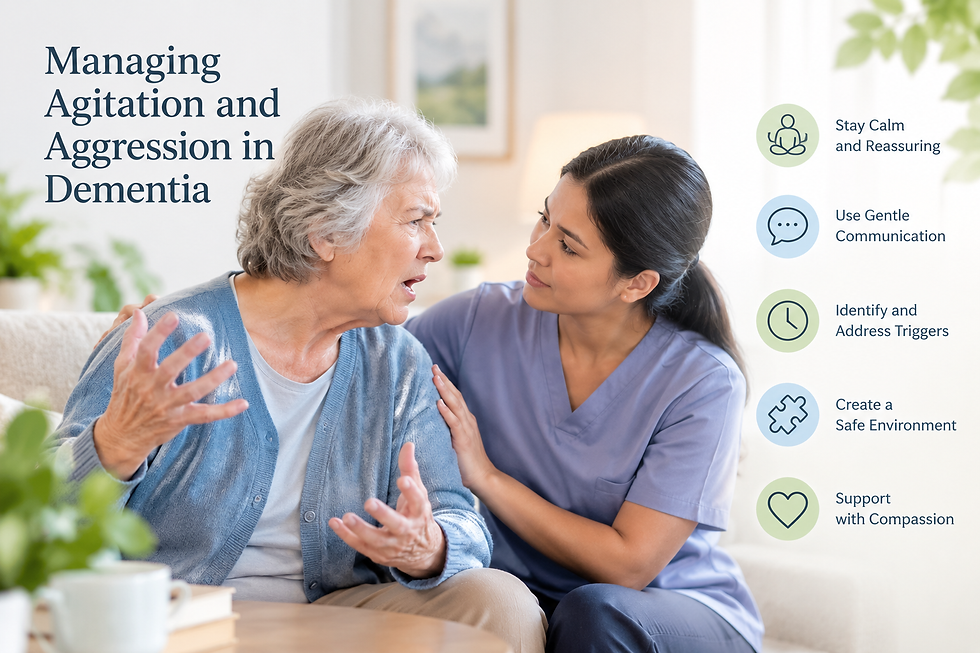
When a senior experiences hyperactive paranoia or hallucinations, our caregivers deliver patient, non-judgmental behavioral de-escalation.
Caregivers maintain an open, non-threatening posture and use a low, calm vocal tone to mirror safety back to the panicked senior.
This professional support provides family members with essential respite, allowing you to rest and recover from caregiver burnout knowing your parent is completely safe
Watching an aging parent experience acute post-surgery confusion, restlessness, or behavioral changes after a joint replacement procedure can be a profoundly distressing experience for local families. It is important to remember that this mental crisis is highly treatable and does not indicate a permanent loss of their cognitive identity. You do not have to navigate the complex logistics of orthopedic recovery and behavioral management entirely on your own. Our trained care team is dedicated to providing high-precision, compassionate in-home support that prioritizes your loved one's joint safety while implementing targeted cognitive re-orientation strategies.
To find out how our customized rehabilitation support and memory care services can bring safety, comfort, and peace of mind back to your household, contact Serenity Home Care today to schedule a warm professional consultation.


Comments